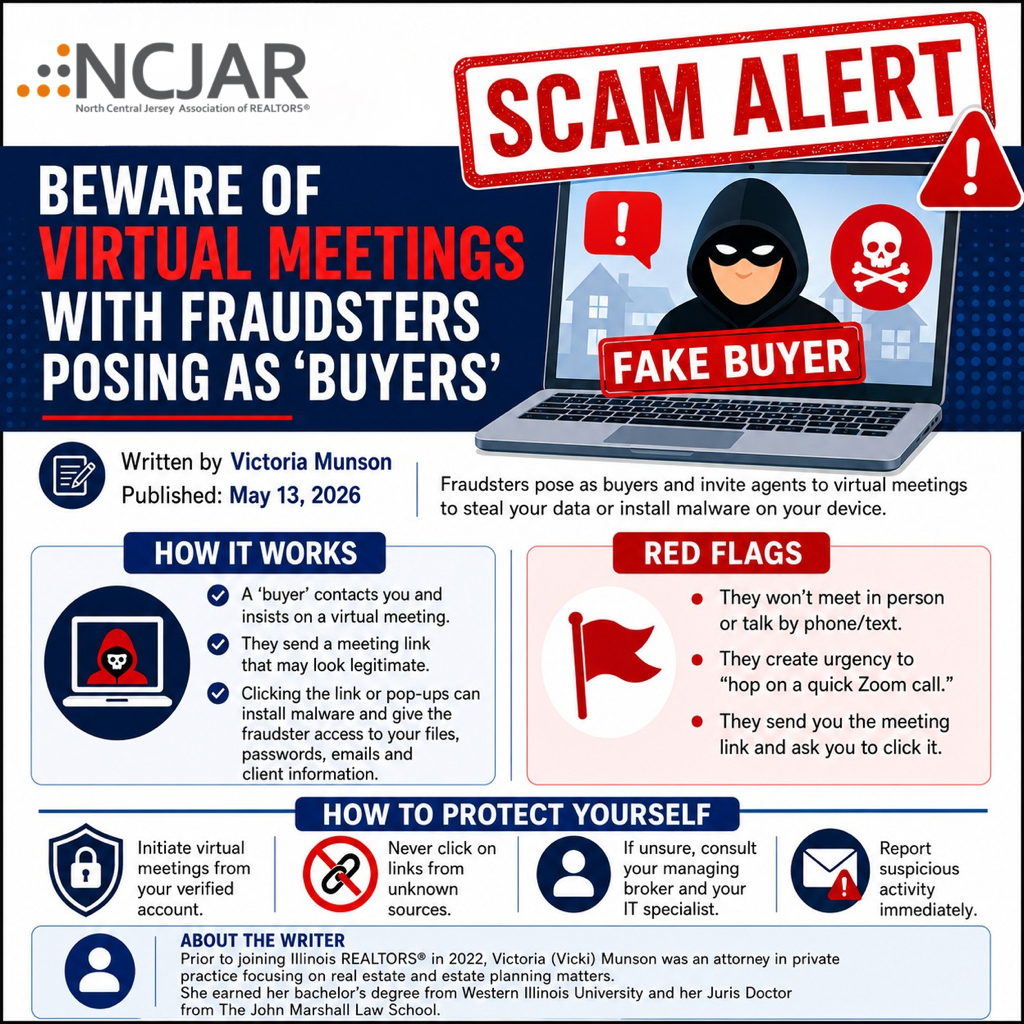
 Many real estate professionals are already familiar with seller impersonation scams. A new threat is now emerging in which fraudsters pose as legitimate buyers to gain access to the devices, files, and sensitive information of real estate agents and brokerages.
How the Scam Works
An agent is contacted by someone claiming to be a prospective buyer interested in a property or seeking buyer representation services. However, the individual insists that all communication take place through a virtual meeting platform.
In many reported cases, scammers use Zoom, though the scheme could involve any virtual meeting application. The “buyer” typically insists on sending the meeting invitation link directly to the agent.
While the invitation may appear legitimate, clicking the link can install malware or malicious software onto your device. This software may allow fraudsters to access emails, passwords, client records, financial information, and other sensitive data.
In some cases, the link may trigger a fake pop-up message prompting you to update software or install a program. Clicking these prompts can also compromise your computer and files.
Warning Signs to Watch For
Be cautious if you notice any of the following red flags:
-
A prospective buyer refuses to meet in person or communicate by phone or text.
-
The individual creates urgency and pressures you to “jump on a quick Zoom call.”
-
The buyer insists on sending the virtual meeting link themselves.
-
You receive suspicious prompts requesting software updates or downloads during the meeting process.
How to Protect Yourself
-
Whenever possible, initiate virtual meetings through your own verified account and send the invitation link yourself.
-
Avoid clicking links from unknown or unverified sources.
-
Do not download files or approve software updates prompted through unfamiliar meeting invitations.
-
If you are uncertain whether a link or request is legitimate, consult your designated managing broker or IT professional before proceeding.
Staying vigilant and following safe cybersecurity practices can help protect both you and your clients from these increasingly sophisticated scams.
Credit: Adapted from information provided by Illinois REALTORS®
